Free Beats vs Paid Beats: The Real Difference (And When Free Costs You)
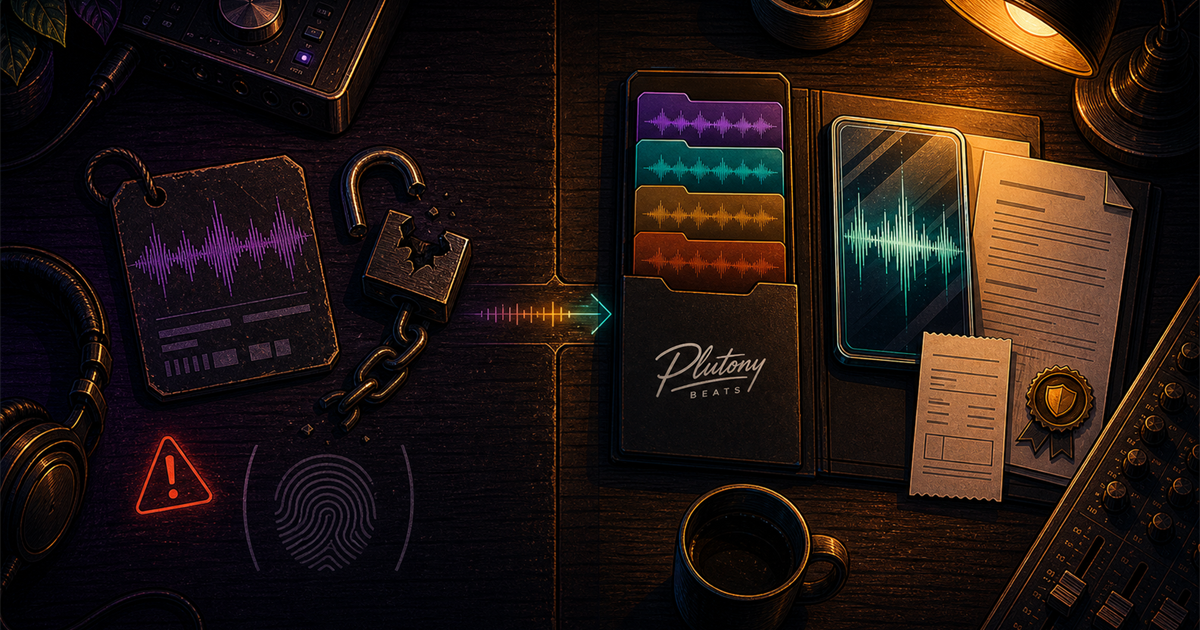
Free beats are useful. They help you write, practice, test your voice, and build momentum when you have no budget. But free beats are rarely "free" in the way beginners imagine. Most free beats come with limits: non-profit use only, required credit, producer tags, no monetization, no Content ID, no Spotify release, or no commercial rights unless the producer explicitly allows them.
Paid beats are not automatically better musically. The difference is permission. A paid license tells you what you can do with the song, what files you receive, how much you can monetize, and when you need to upgrade.
TL;DR: When Free Is Fine and When It Is Not
Use free beats for writing practice, rough demos, private recording sessions, open verses, non-monetized freestyles, and testing whether your voice fits a style.
Pay for a license when you distribute to Spotify or Apple Music, monetize on YouTube, sell the song, run ads, perform the song commercially, pitch it for sync or brands, or want untagged WAV or trackouts.
If the release matters, pay for the rights before it goes public.
What "Free" Actually Means in Beat Selling
In the beat-selling world, "free" usually means one of three things.
Free for non-profit use means you can use the beat for practice or non-commercial uploads, but you cannot earn money from the song. That may rule out streaming royalties, YouTube monetization, paid shows, ads, merch bundles, and sync.
Free download with credit means the producer lets you download the beat if you credit them. Credit is not the same as a commercial license. Putting "prod. by" in the title does not magically give you Spotify rights.
Free with tag means the producer tag stays in the beat. Tagged beats are useful for writing and freestyles, but they can make a serious release sound unfinished. Many free downloads are tagged MP3s, while paid licenses unlock untagged WAV or trackout files.
Platforms like BeatStars and Airbit let producers configure free downloads in different ways, but the default buyer lesson stays the same: the producer keeps ownership, and the artist only receives the rights stated in the download terms.
The Hidden Limits on Free Beats
The first hidden limit is monetization. A free YouTube beat might be fine for a freestyle video, but not for a monetized upload. If the producer, distributor, or rights administrator claims the beat through YouTube Content ID, your video revenue can be redirected or blocked.
What Content ID Actually Does
Content ID is YouTube's audio fingerprint system. It compares your upload against registered reference files and can automatically create a claim when your song contains a registered beat, loop, or sample. A claim is not always a strike, but it can redirect ad revenue, block monetization, or force you to dispute with proof.
This is why free beats get messy. Content ID does not read your YouTube description or understand that a producer wrote "free" in the title. It matches audio. If you have a license, keep it ready. If you only downloaded an MP3 with no written terms, you may have nothing useful to show.
The second hidden limit is distribution. Many free beat descriptions say "free for non-profit only." Spotify and Apple Music are commercial platforms, even if you only expect three streams. Uploading there usually requires a paid lease unless the producer clearly grants commercial rights.
The third hidden limit is file quality. Free downloads are often MP3s. If you care about a polished mix, you probably need WAV or trackouts.
The fourth hidden limit is proof. If you only downloaded a file from a YouTube description and never received a license, you may have no clean documentation when a distributor, label, playlist curator, or collaborator asks for rights proof.
Can You Make Money With Free Beats?
Sometimes, but only if the producer explicitly allows commercial use. Do not assume. Look for phrases like "commercial use allowed," "free for profit," or a license PDF that states the rights clearly. Even then, check the limits: streams, sales, Content ID, publishing, credit, and expiration.
If the description says "free for non-profit use only," you should treat it as non-commercial. That means no monetized YouTube, no Spotify release, no paid ads, no sync, and no selling the song.
The confusing part is that some producers use "free" as marketing. They want artists to write to the beat, then upgrade when the song is ready. That is not a scam by itself. It is a funnel. The problem starts when artists skip the upgrade and release commercially anyway.
When a Free Beat Genuinely Makes Sense
Free beats are great for practice. If you are learning to record, testing flows, or building confidence, free instrumentals let you create without burning money.
They are useful for demos. Write the hook, record a rough verse, send it to collaborators, and decide whether the idea deserves a paid license.
They work for low-stakes content. Freestyles, open verses, and short social clips can help you build consistency. Just read the terms before monetizing.
They can help you find your sound. Try five lanes before buying one. Maybe you think you need dark trap, but your voice actually lands better over soulful boom bap or R&B.
When You Must Pay
Pay when the song becomes a release. If you are uploading to Spotify, Apple Music, Amazon Music, Tidal, or YouTube Music through a distributor, you need commercial rights.
Also pay before you spend money around the song. A free beat might feel harmless while it is sitting in your session folder, but the moment you pay for cover art, a music video, playlist pitching, ads, or studio time, the beat becomes part of a bigger business decision. Clearing the instrumental after the rest of the campaign is built puts you in the weakest negotiating position.
If you are collaborating with another artist, paying matters even more. A feature artist, manager, distributor, or playlist team may ask whether the beat is cleared. Having a receipt and license makes the conversation simple. Saying "the YouTube title said free" does not.
Pay when money is involved. YouTube monetization, paid performances, merch bundles, sync, brand deals, and ads all require rights that free downloads usually do not grant.
Pay when you want the song to sound professional. A WAV or trackout license gives you cleaner files for mixing and mastering. Read MP3 vs WAV vs Trackouts before choosing the cheapest tier.
Pay when you need peace of mind. A license email, receipt, and PDF are boring until someone questions your rights. Then they are everything.
A Realistic Claim Scenario
Imagine you download a "free Drake type beat" from YouTube, record a strong song, and upload it everywhere. Three months later, the song starts gaining traction. Then a claim hits your YouTube video. Your distributor asks for proof. The producer says the free download was non-profit only. Now you have to take down the release, buy a license after the fact, or negotiate from a weak position.
That is the cost of free. Not always a lawsuit. Often it is stress, delay, lost revenue, and a messy release history. I have seen artists build a whole rollout around a free YouTube version, then come back after traction asking for an exclusive. By then, the beat may already have other leases, and the artist has less leverage.
Smart Hybrid Strategy
Use free beats at the idea stage. Write often. Record rough demos. Learn your voice. Build a folder of songs that feel promising.
Then upgrade only the winners. If a hook survives a week, if your friends replay it, if the verse feels natural, buy the correct license before release. For many artists, that means a WAV lease first, trackouts for serious singles, and unlimited or exclusive rights only when the song proves itself.
This strategy protects your budget and your catalog. You do not need to buy every beat you touch. You do need to license every beat you release commercially.
For the broader rights picture, read Beat Licensing 101, then connect it to your rollout with How to Release Your Song on Spotify, Apple Music & More. If you are ready to move from demo mode to release mode, browse affordable Plutony Beats leases here: shop beats for your next song.
FAQ
Can I release a song with a free beat on Spotify?
Only if the producer clearly gives you commercial distribution rights. If the beat says "free for non-profit use only," do not upload it to Spotify, Apple Music, or other commercial platforms.
What is Content ID and how does it affect my song?
Content ID is YouTube's automated matching system. If your song contains a beat that has been registered, YouTube may create a claim. That can redirect revenue, block monetization, or require you to dispute with license proof.
Do I need to remove a free beat song if I get a claim?
Not automatically. First check what rights you have. If you have a valid license, dispute with proof or contact the producer. If you do not have commercial rights, removing or relicensing the song may be the cleanest path.
Can a producer take down my song after I uploaded it with a free beat?
They may be able to if your use violates their terms, especially if the free download was non-profit only. A written license is what protects you.
How do I know if a free beat allows commercial use?
Look for explicit terms: commercial use, monetization, streaming platforms, stream limits, credit, Content ID, and file rights. If those terms are missing, assume you need to ask or buy a paid license.
Found your sound?
Browse premium beats crafted for artists like you.
Tags
Related Posts
What Is a Type Beat? Complete Guide for Artists
What is a type beat? A clear guide for artists — how naming works, what's legal, why some are free, and how to find one that actually fits your voice.
How Much Does a Beat Cost in 2026? Real Pricing Breakdown
Beat prices in 2026: real numbers from $25 leases to $5,000 exclusives, plus 7 factors that change the price and how to spot a bad deal.
How to Buy Beats Online Safely: Avoiding Scams in 2026
Buying beats online in 2026: a 9-point safety checklist, how to verify a producer, and what a real exclusive license must include.