How to Perform Your Music Live: From Bedroom to Stage
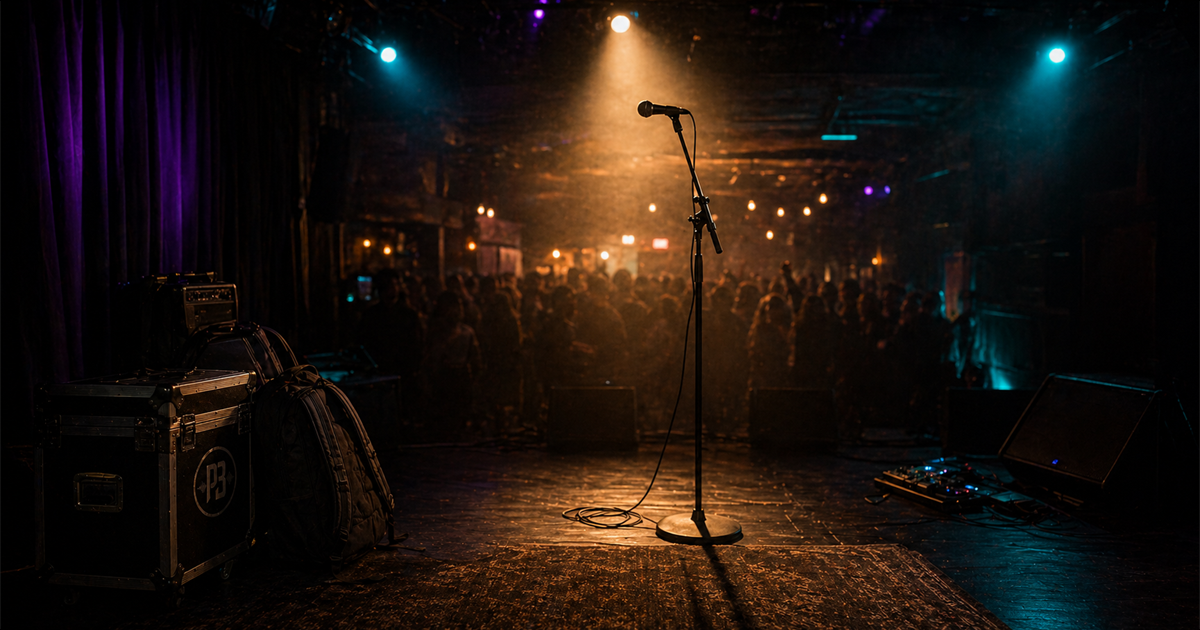
The gap between making music in your bedroom and performing it live feels enormous the first time you stand at the edge of a stage. Your heart hammers, the monitor is too loud, and your instrumental is playing half a key too high because you forgot to double-check the file. It happens to everyone. What separates the artists who grow from those first stumbles and the ones who give up is preparation — not talent, not gear, not connections. Just preparation.
Live performance is also worth taking seriously financially. For many independent artists, live shows and merch remain among the most dependable income streams because they combine direct payment, audience growth, and fan connection in the same room. The stage is not just an experience — it is part of the business. Here's how to approach it from the beginning.
Preparing Your Setlist and Backing Tracks
Your setlist is your show's architecture, and it matters more than most beginners think. Open with a track that grabs attention immediately — your most energetic or recognizable song — and close with something anthemic and crowd-focused. In the middle, build toward a peak and let one recovery track breathe before pushing back up. A tight 20-minute set of four or five songs lands harder than a loose 40-minute set where energy drifts.
Before any show, you need to create what producers call a "performance mix" — a version of each beat that's ready for live use. Mute the main lead vocal track since you will be delivering it live, keep chorus doubles and adlibs around -3dB so they support without burying your voice, and make sure the track is mono-compatible. Mono compatibility is critical: many venue PA systems are effectively mono, and a stereo file that sounds huge in your headphones can collapse to mud on a club speaker. Carry mono-safe versions when in doubt. Export every track at the same volume level so the sound engineer has a consistent starting point.
For playback software, Ableton Live 12 Intro sits around $99 and is a standard choice because it handles tempo sync and cue points cleanly under pressure. If you want something simpler and tablet-friendly, Stage Traxx is a strong setlist/playback app, but check current App Store pricing because it can vary by region and version.
Technical Setup: Mic, Monitors, and Backing Tracks
You don't need a complicated rig to sound professional. For most rappers starting out, the Shure SM58 around $99 is the go-to live microphone for a reason — it is nearly indestructible, handles loud environments without feedback, and every sound engineer at every venue in the world knows exactly how to mix it. Hold it correctly: grip the shaft, not the grille. Cupping the ball blocks the microphone's frequency response and causes the kind of feedback that makes everyone cringe. Keep it 2–4 cm from your mouth, and pull slightly back during louder sections.
Monitors tell you what you sound like on stage, because the front-of-house speakers are aimed at the audience, not you. If the venue doesn't provide floor monitors — smaller clubs often won't — in-ear monitors are your solution. The KZ ZS10 Pro around $45 is a remarkable budget IEM that punches well above its price point. Plug them into the monitor send and you'll hear yourself clearly no matter how noisy the room gets.
Building your own setup is a gradual process. Start with just your performance mix files on a phone and a venue-provided microphone at open mics — total cost is essentially zero. When you start playing ticketed shows, build in stages:
- First upgrade: Shure SM58, XLR cable, and KZ ZS10 Pro IEMs — roughly $175-$250 depending on sales and accessories.
- Playback upgrade: Ableton Live 12 Intro or another reliable playback app — about $99 if you choose Ableton Intro.
- Control upgrade: an interface such as a Focusrite Scarlett Solo or 2i2, depending on whether you need one or two inputs. Current Scarlett 2i2 pricing often sits around $225-$240, so treat it as an upgrade pick rather than a guaranteed $500-build default.
- Monitor upgrade: a compact powered floor monitor such as an Alto TX-series speaker can help when venues do not provide usable monitoring, but buy this only after you know you actually need to carry your own wedge.
The point is not to own every piece immediately. The point is to make your live rig more reliable each time your shows get more serious.
Stage Presence: Energy, Movement, and Crowd Control
Stage presence is not about dancing ability or natural charisma. It comes down to one basic thing: never look frozen.
The most common beginner mistake is what veterans call the "statue effect." You stand center stage, fix your eyes on one spot, and essentially deliver a vocal performance while your body forgets it's at a concert. Movement doesn't have to be choreographed — it just has to exist. Walk the stage. Dip to the beat. Turn toward different sections of the crowd and hold eye contact for a beat or two. The audience reads motion as confidence, and confidence is contagious.
Crowd interaction is your most powerful tool for turning a room. Call-and-response moments — where you prompt the audience to yell back a hook line, a phrase, or your name — create collective energy that nobody who was there will forget. Pick one moment in your set, ideally during the chorus of your biggest track, and rehearse exactly what you'll say to hand the moment to the crowd. Keep it simple. "When I say [phrase], you say [phrase]" is enough to light up a room. One conditioning drill that works surprisingly well: practice rapping through your verses while jogging. It builds the breath control you'll need when adrenaline is making your heart race at 140 BPM and you still have to hit every syllable of a fast verse cleanly.
Overcoming Stage Fright
Stage fright is physiological. The adrenaline dump before you walk on stage is the same mechanism that makes you alert in a crisis, and that energy can work for you or against you depending on how you direct it. Almost every performer at every level experiences some version of it before going on — the goal isn't to eliminate it but to channel it.
The most reliable technique in the minutes before you perform is box breathing: inhale slowly for a count of four, hold for four, exhale for four, pause for four. Repeat five to ten times. This directly lowers your adrenaline response and slows your heart rate, shifting you from panic mode into focused mode. Two quiet minutes backstage or in the bathroom with this technique will do more for your performance than an hour of overthinking your set.
A few anxiety behaviors that consistently sabotage shows: apologizing to the crowd when something goes wrong (the audience often won't have noticed until you pointed it out), drinking alcohol to calm nerves (it affects breath control and timing more than people expect), and rushing the tempo because anxiety makes internal time feel slower than it is. Trust your rehearsals. The version of this set you practiced alone in your room at 11 PM is the version that will carry you through.
Building Your Local Performance Circuit
Nobody hires an artist they've never seen perform, and the only way to build a performance reputation is to perform repeatedly. The entry point in any city is open mics, and in 2026 open mic culture for hip-hop is healthy everywhere from Chicago to London to Berlin. Identify three to five open mic nights within reach, sign up for every available slot, and treat each one like a real show — same performance mix, same prep, same energy.
After a dozen open mics you'll know promoters, venue staff, and other local artists by face. That network is how bookings happen at the next level. Local support slots for touring acts, festival showcases, and paid club nights all run through personal relationships, not cold emails to a general inbox. When you do reach out to a venue directly, an EPK — electronic press kit — with a live video clip, your streaming links, and a short bio is the professional standard. Keep the email brief, follow up once after a week if you haven't heard back, and be patient with the process.
Plutony Beats provides professionally arranged, well-mixed backing tracks in every style and tempo, which means your performance catalog can expand consistently as you play more shows. If you are still choosing what to perform, start with beats whose BPM, key, and mood already match your delivery; the right tempo and key make crowd control easier before you ever step on stage. Document every performance you give, even the small early ones, and post the clips. Three months of consistent live footage builds social proof faster than anything else you can do.
The bedroom is where the music gets made. The stage is where it becomes real. Start small, start now, and trust that every show — however imperfect — is teaching you something the studio never can.
Your next step: choose two or three Plutony Beats instrumentals, make mono-safe performance mixes, rehearse a tight 15-minute set, and record one full run-through on your phone. If the energy holds up in rehearsal, you are much closer to being ready for the room.
Found your sound?
Browse premium beats crafted for artists like you.
Tags
Related Posts
Autotune for Beginners: When and How to Use It
Learn how autotune works, how to dial in the right settings for rap vocals, and when using it will actually hurt your sound.
How to Record Doubles, Adlibs, and Backing Vocals
Learn pro techniques for vocal doubles, adlibs, and backing vocals — the layers that make rap tracks sound polished, wide, and full.
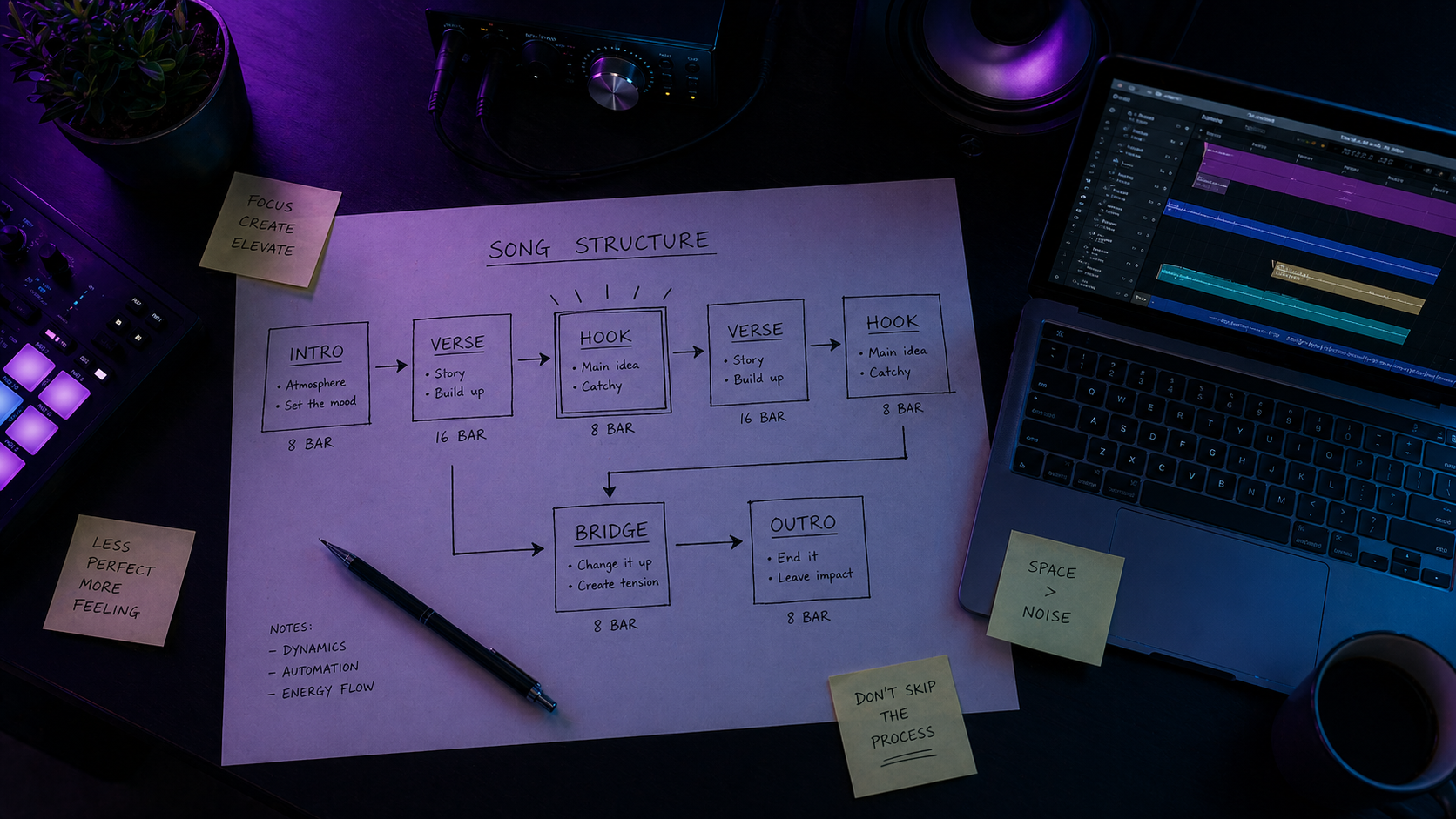
Understanding Song Structure: From Idea to Finished Track
Master rap song structure with proven templates for verses, hooks, and arrangements that keep listeners engaged from start to finish.