Understanding Song Structure: From Idea to Finished Track
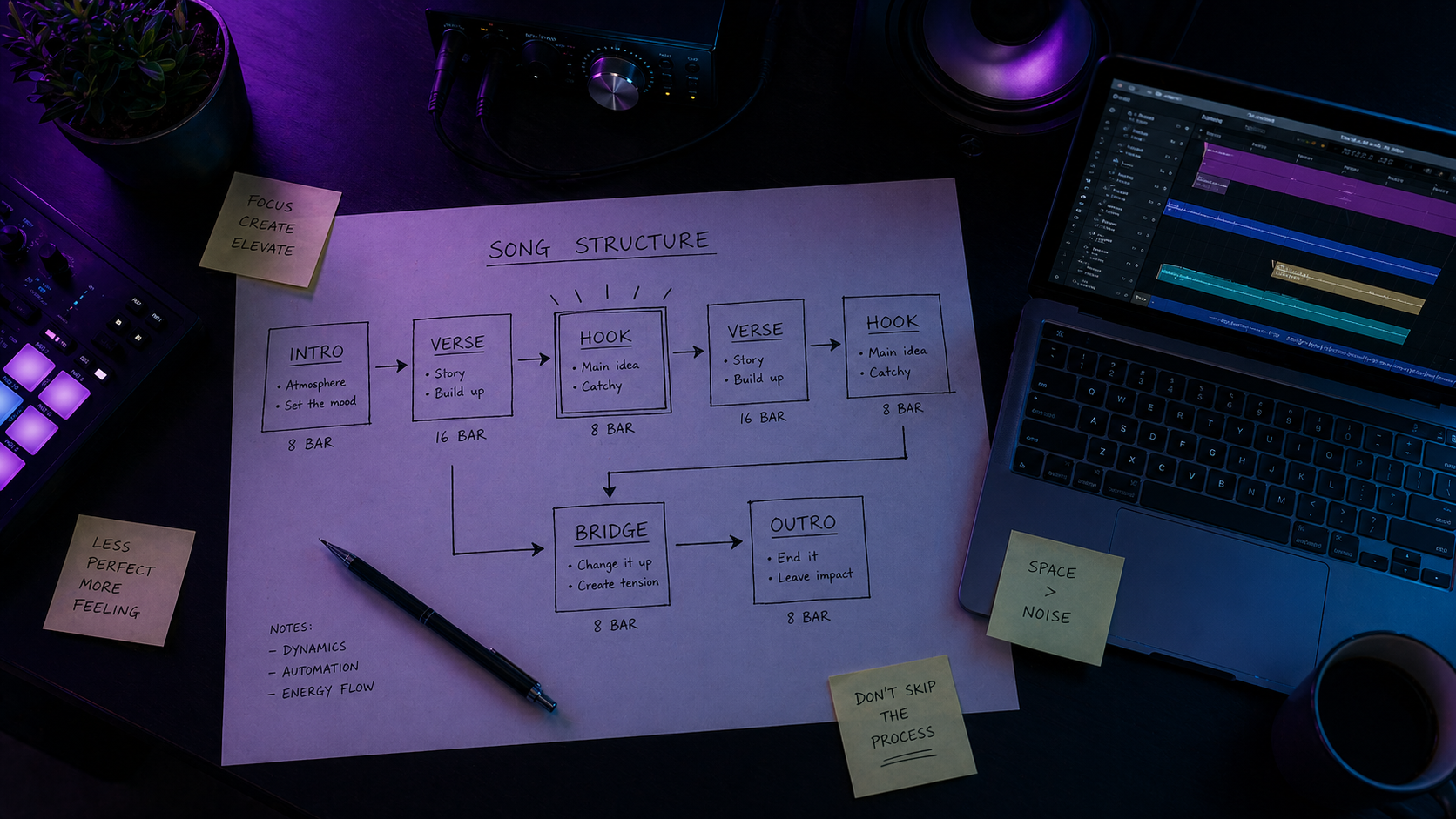
You've written a fire hook. You've got a verse that slaps. But when you put it all together, the song feels flat, repetitive, or weirdly paced. The individual pieces are strong, but the whole thing doesn't hold attention. That's a structure problem, and it's one of the most common reasons independent tracks lose listeners before the second verse even starts.
Here's the reality of music in 2026: listeners decide fast. If the opening does not give them a reason to stay, many will skip before the song has a chance to develop. Many modern rap records now land closer to the 2:20 to 2:40 range than the older three-plus-minute model, so understanding structure is not just music theory — it is survival in an attention economy. Let's break down exactly how modern rap songs are built, from the classic formula to the arrangements shaping playlists right now.
Why Structure Matters in Modern Music
Structure is the invisible architecture of a song. It's what makes a listener feel tension, release, surprise, and satisfaction without them consciously knowing why. A well-structured track guides the ear through a journey. A poorly structured one makes even great bars feel monotonous.
The shift in how people consume music has changed what "good structure" means. Many modern trap and drill songs begin directly with the hook or a micro-intro under eight seconds rather than a long instrumental buildup. Songs are increasingly arranged around a single viral moment, a 15-second loop that works on TikTok and Reels. Often the catchiest part of the track is placed at the very beginning to cater to short attention spans. This doesn't mean artistry is dead — it means the container has changed, and smart artists adapt their arrangement to fit how people actually listen.
The practical takeaway is this: every second of your song needs to earn its place. If your intro runs 30 seconds of instrumental before any vocals come in, you risk losing a significant chunk of potential listeners. If your verse runs 16 bars but the last four bars do not add anything new, cut them. Structure is about respecting your listener's time while maximizing the emotional impact of your words and your beat.
Verse-Chorus-Bridge: The Classic Formula
The verse-chorus-bridge format has been the backbone of popular music for decades, and it still works. Understanding it gives you a foundation you can build on or deliberately break away from.
In the classic format, the verse is where you tell your story, paint your picture, or deliver your bars. It is the section that changes lyrically each time it appears. The chorus, or hook in hip-hop terms, is the repeated section that anchors the song — the part listeners remember, sing along to, and come back for. The bridge is a contrasting section that typically appears once, usually after the second chorus, offering a different melody, rhythm, or perspective before the final chorus hits.
For rap, this traditionally looked like: Intro, Verse 1 (16 bars), Hook, Verse 2 (16 bars), Hook, Bridge, Hook, Outro. This format works beautifully for storytelling rap, conscious hip-hop, and R&B-influenced tracks where the emotional arc benefits from that bridge moment. If you're writing a song that builds toward a revelation or a shift in perspective, the bridge is your tool for delivering it.
However, knowing the classic formula matters most so you understand what you're choosing not to do when you go a different direction. Rules only become powerful once you know them well enough to break them intentionally.
Trap Song Structure: Intro, Hook, Verse, Adlibs
Modern trap and drill have evolved their own structural language that looks quite different from the classic formula. The bridge is less common in street rap and trap because it can slow down the momentum when the track is built around immediate energy. Instead, artists rely on beat drop-outs, vocal cadence switches, and ad-lib layers to create contrast without breaking the flow.
A reliable modern template is: Intro (4 bars) -> Hook (8 bars) -> Verse 1 (12 bars) -> Hook (8 bars) -> Verse 2 (12 bars) -> Hook (8 bars) -> Outro. Notice two critical differences from the classic structure. First, the hook comes before the first verse, not after it. This front-loads the catchiest part of the song, hooking the listener immediately. Second, the verses are often 12 bars instead of the traditional 16 bars. The shorter verse gets the listener back to the chorus faster and keeps the track moving.
This shorter format also explains why hit songs are getting shorter overall. When you trim each verse by four bars and skip the bridge entirely, a tight track can come in well under three minutes. That's not laziness — it's precision. Every bar that stays in the song needs to carry its weight. Padding a verse with filler bars to hit 16 just because "that's how it's done" is the fastest way to lose a listener in 2026.
Ad-libs play a structural role too. In trap, ad-libs aren't just decoration — they fill space, add energy, and signal transitions. A well-placed ad-lib run right before the beat drops for the hook creates anticipation. Layered ad-libs during the hook make the chorus feel bigger and more energetic than the verse, even when the lyrics are the same.
When to Break the Rules
Once you understand the templates, the real artistry is knowing when and how to deviate. The best songs often break one structural expectation while honoring the rest, creating a moment of surprise that makes the track memorable.
One effective technique is the extended intro that doubles as a verse. Instead of a standard four-bar instrumental intro, start with a spoken-word section or a half-sung, low-energy delivery that builds into the first hook. This works especially well for storytelling tracks where context matters. The key is that even this "extended intro" should hook the listener in the first few seconds with something compelling — a provocative line, an unusual sound, or an unexpected vocal tone.
Another way to break structure is the beat switch. Rather than a bridge, some artists drop an entirely different beat in the final third of the song. This creates the contrast a bridge would provide but with more dramatic impact. Structurally, the song essentially becomes two short songs stitched together, and when done well, it gives listeners two reasons to come back.
You can also play with energy dynamics within a standard structure. Professional producers often follow what is sometimes called the 4-bar rule: never let a loop play identically for more than four bars. Every four bars, something changes — a hi-hat drops out, a new counter-melody enters, the 808 pattern shifts, or the rapper switches their flow. This maintains energy and forward motion without requiring a complex arrangement. The listener may not consciously notice these small changes, but they feel the difference between a track that breathes and one that feels like a treadmill.
A growing arrangement move is blending standard 808s with live guitars or strings. Structurally, these live elements are often introduced during the second hook or the outro to build cinematic tension without changing the core song arrangement. It's a subtle way to make the back half of your song feel bigger than the front half, rewarding listeners who stick around.
Arranging Your Song With the Beat
The final piece of the structure puzzle is how your vocals interact with the beat's arrangement. Too many independent artists write and record as if the beat is a static backing track. In reality, a well-produced beat already has structural cues built in — rises, drops, filter sweeps, percussion changes — and your vocal performance should respond to them.
When the beat strips down to just a kick and an 808, that's your cue to pull back your delivery too. Lower your volume, tighten your flow, create intimacy. When the full production crashes back in with hi-hats and melodies, that's when you ramp up the energy and ride the wave. This push and pull between vocal performance and beat arrangement is what makes a song feel alive rather than like vocals pasted on top of a loop.
A practical workflow that top writers use is reference tracking. Drop a successful song in a similar style into your DAW and place markers at every structural change — where the intro ends, where the hook starts, where the verse kicks in, where the beat changes. Use these markers as an exact blueprint for your own song's timing. You're not copying the song; you're borrowing the arrangement logic that already works.
When buying beats online, look for producers who actively arrange their beats with clear drop-outs, rises, and section changes rather than selling a single three-minute loop. Plutony Beats, for example, structures beats with distinct verse, hook, and bridge sections already mapped out, making it much easier for artists to know exactly where to place their vocals and how to shape the energy of each section.
The bottom line is this: start with the hook. If your hook is not undeniably catchy, the rest of the structure will not save you. Write the hook first, build the verses around it, and arrange everything to serve the listener's experience. If your finished song runs past three minutes, challenge yourself to cut it closer to 2:30. Remove the weakest bars. Get to the point faster.
To put this into practice, open the Plutony Beats catalog, choose a beat with clear section changes, and drop it into your DAW. Place markers for intro, hook, verse, and outro, then write your hook first and build the rest of the song around that map. In an era where every second is a chance for someone to skip, a tight, well-structured song is not just better music — it is smarter music.
Found your sound?
Browse premium beats crafted for artists like you.
Tags
Related Posts

How to Choose the Right Beat for Your Song
How to choose a beat for your song: BPM matching, key and mood analysis, genre fit, and the test-recording method that saves money.

Autotune for Beginners: When and How to Use It
Learn how autotune works, how to dial in the right settings for rap vocals, and when using it will actually hurt your sound.

How to Perform Your Music Live: From Bedroom to Stage
Your first live show doesn't have to be scary. Here's the practical playbook — from setlists to stage presence — to own the stage from day one.