How I Made 800+ Beats: Lessons from Years of Producing
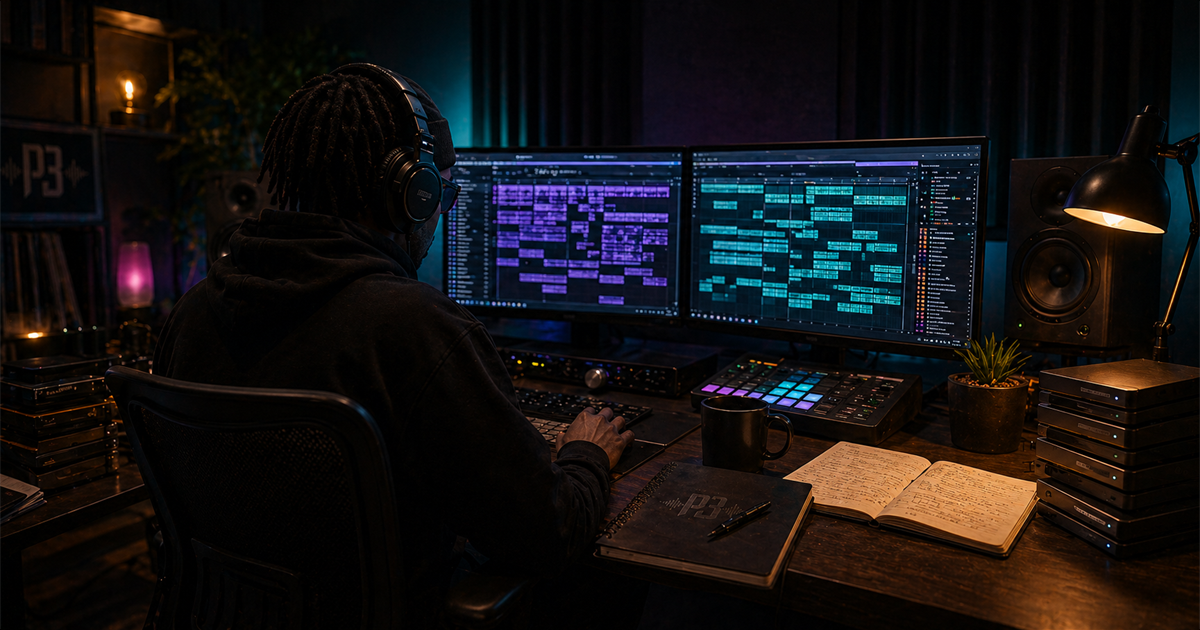
Making hundreds of beats taught me things no tutorial could have explained cleanly. Some lessons came from finished tracks, some from bad loops I almost threw away, and some from learning how to keep showing up when the excitement wore off.
The Early Days: Finding My Sound
I remember the first beat I ever made. It was terrible. A four-on-the-floor kick pattern, a snare that sounded like a tin can, and a melody lifted directly from a free sample pack I found online. But I saved it. I named the project file something embarrassing that I won't repeat here, and I played it back probably fifteen times that night. I thought it was incredible.
That naivety is actually one of the best things about being a beginner. You don't know what you don't know, which means you have no ceiling in your head yet. The problem is that most producers hit a wall somewhere between beat thirty and beat one hundred. You start to hear what's wrong with your work — the snares are thin, the low end is muddy, the melodies are predictable. And instead of pushing through, a lot of people quit.
I didn't quit. But I also didn't magically figure it all out. It took closer to 300 beats before I started hearing a thread of something consistent in my sound — a signature, even if I didn't have words for it yet. A lot of producers I respect describe a similar long runway: you make a large body of work before the patterns become obvious. That's not discouraging news. That's a map.
My early years were about emulation. I would open a session, pull in a reference track I loved — early Metro Boomin, some Timbaland deep cuts, whatever was rattling my speakers that week — and I'd try to reverse-engineer the arrangement. Not steal it, but understand it. What's the kick doing in the intro versus the drop? Where does the hi-hat variation land? When does the melody breathe and when does it push? Mapping those patterns onto blank templates trained my ear faster than any course ever could.
That process eventually became the system I use now. I break it down step by step in my beat-making workflow guide, from the first loop to the final export.
Workflow Evolution: Speed vs. Quality
For years I approached every session the same way: open FL Studio, stare at the screen, wait for inspiration. Sometimes it came. More often, I'd spend three hours tweaking a hi-hat and close the session with nothing finished.
The shift happened when I started treating sessions like a craftsman opening a workshop. Every morning, before I touched my phone or checked sales numbers, I would complete one eight-bar loop. One. Eight bars. Sometimes it turned into a full beat. Sometimes it stayed a loop. But the rule was non-negotiable: nothing else opens until that loop is done. The deep work approach — your best creative output happens before the noise of the day gets in — turned out to be completely true for music production.
The second workflow change that mattered was batch processing. I used to try to do everything in one session: compose, arrange, mix, export. That's a mistake. The brain that builds great melodies is not the same brain that makes great mixing decisions. Now I dedicate specific days to specific tasks:
- Mondays are for building loops.
- Tuesdays are for arrangement.
- Wednesdays are for mixing, not producing.
- Thursdays are for content and marketing.
This separation made me more productive and, weirdly, more creative, because I wasn't trying to be everything at once.
Time tracking with Toggl revealed something humbling: a lot of my studio time wasn't spent making music at all. It was spent searching through samples, browsing presets, and fiddling with plugins I'd already decided not to use. That data pushed me to build my "Go-To" folder — five kicks, five snares, five hi-hats, three 808s. That's it. The constraint is the point. Creativity thrives inside boundaries, and now that folder opens every single session without thought.
Gear That Shaped My Sound
Here's what nobody tells beginners about gear: your signature sound lives in how you use what you have, not in what you have. I've seen producers with every plugin ever made churn out generic music, and I've heard bedroom producers with stock plugins make sounds that stop you cold.
That said, some tools genuinely changed how I worked. FL Studio has been my DAW for years — I know every shortcut, the Piano Roll feels like an extension of my hands, and Ableton Live, despite its genuine strengths, never stuck. Comfort and speed in your DAW is a competitive advantage you shouldn't throw away lightly. Splice became essential not for the sounds themselves but for the organization. Before it, I had folders named things like "drums final FINAL use this one" nested inside three different hard drives. Now my samples live in one searchable library, and the difference in session flow is immeasurable.
The plugins I returned to most are embarrassingly unglamorous. A good parametric EQ, a compressor I actually understood, a reverb I wasn't afraid of. Gear Acquisition Syndrome — the endless hunt for the plugin that will finally make your beats sound professional — is one of the most expensive traps in production. The beats I admired used the same ten to fifteen core sounds repeatedly. The signature came from how those sounds were arranged and processed, not from finding new ones.
What I'd Do Differently Starting Today
If I were starting over in 2026, the biggest change I'd make is simpler than any technique: I would never delete a beat.
In my first few years, I deleted hundreds of sessions I thought were bad — experiments that didn't land, ideas I was embarrassed by. Some of those "bad" beats had one section buried inside a poor arrangement that was genuinely interesting. That melody, that bass pattern, that drum break — gone forever. Now I save everything. Not because every beat is worth releasing, but because unfinished sessions are labeled loops waiting for the right moment. Some of my best recent work started from a melody I pulled out of a session made two years ago and shelved.
I'd also start using AI tools earlier — not to replace creativity, but to accelerate ideation. Tools like Suno and AIVA can be useful for sketching melodic concepts quickly and breaking creative blocks. The best results still come from treating that first spark as raw material: shape the groove, simplify the melody, make room for the artist, and keep refining until the beat feels intentional.
The fifteen-minute challenge helped me break writer's block during those early years and still works now. The rule is simple: set a timer for fifteen minutes and build a chord progression, counter-melody, and drum foundation before it goes off. Finish it or don't — the act of starting with a deadline cuts through paralysis every time.
The Beats That Changed Everything
There's a producer cliché that goes: you won't get your first placement until beat number X. For me, it was closer to beat 450. Around beat 200, I started wondering if it was going to happen at all. The thought passed. I kept making beats.
Producer burnout is real, even if the exact numbers depend on who you ask. I felt it. There were months where opening the DAW felt like a chore, where every loop sounded like everything I'd already made. The producers who push through aren't necessarily the most talented. They're the ones who found a way to keep going when it stopped feeling easy.
What I learned from those slumps is that consistency is a skill, not a personality trait. You build it the same way you build anything: by showing up on the days you don't want to, making something even when it's not your best work, and trusting that volume leads to variance, and variance leads to breakthroughs. Beat 451 was better than beat 450. Beat 800 is better than beat 700. The math doesn't lie — it just requires patience to see it.
If you're somewhere in the middle of your own count — beat 50, beat 300, it doesn't matter — the path forward looks the same from wherever you stand. Keep going. Don't delete anything. Build your system. For practice, take one finished beat you admire, mark the intro, verse, hook, and drop points in your DAW, and study how the arrangement keeps moving. You can do that with your own archive, a favorite release, or a beat from the Plutony Beats catalog.
Found your sound?
Browse premium beats crafted for artists like you.
Tags
Related Posts
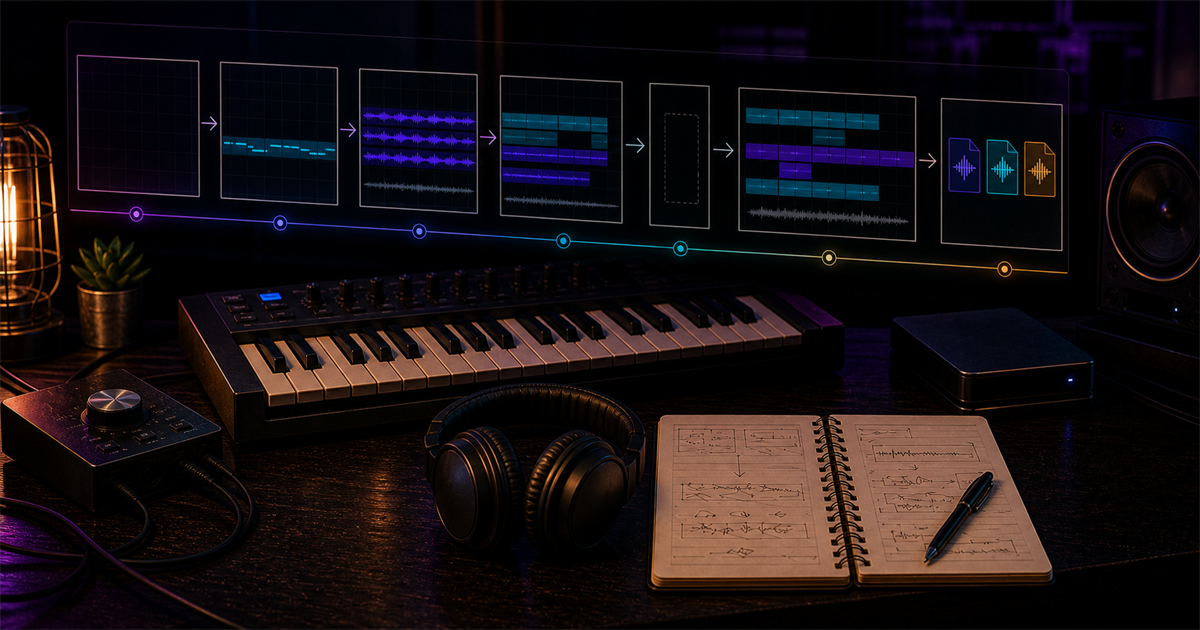
My Beat-Making Workflow: From Blank Canvas to Finished Beat
My complete beat-making workflow from blank canvas to finished beat ready for sale — melody, arrangement, mixing for vocals, and export tips.
The Tools I Use: My Current DAW, Plugins, and Setup
FL Studio, Omnisphere, Serum 2, and a minimal desk setup — here's every tool I actually use to make beats in 2026.
Producer's Block: How I Deal With Creative Slumps
Every producer hits a wall. Here's how I navigate creative slumps, stay motivated, and turn bad sessions into something useful.