Boom Bap Type Beats: A Lyric-First Buying Guide
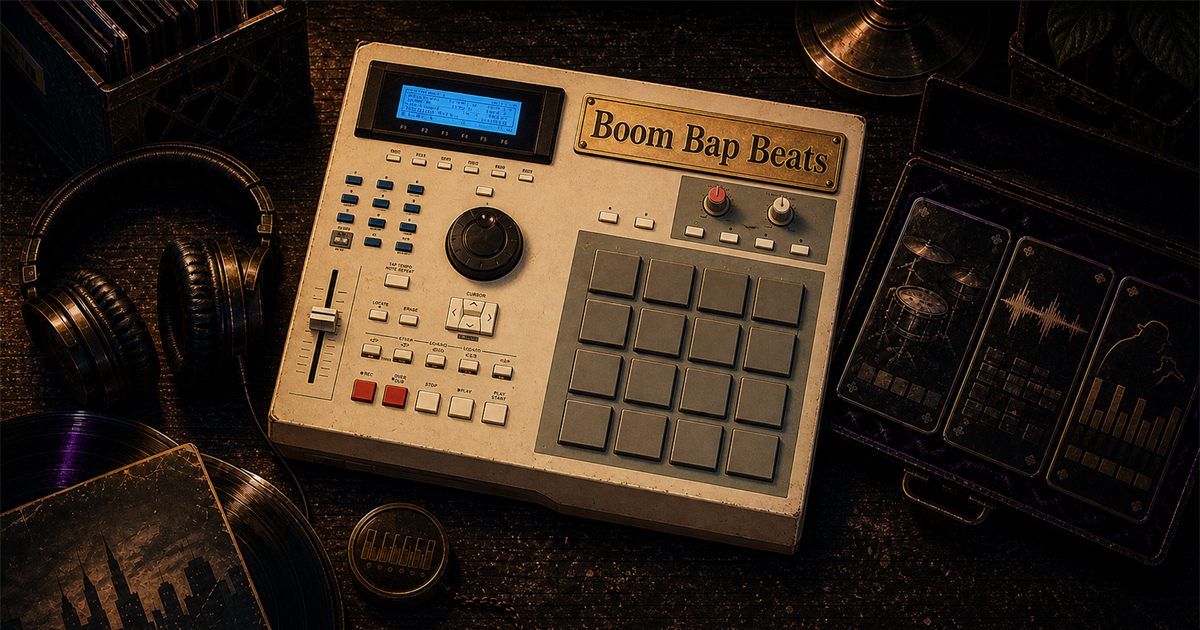
Boom bap type beats are built for rappers who want the vocal in front. The drums knock, the loop has texture, and the space between them gives the verse room to breathe.
That makes boom bap powerful, but unforgiving. A trap beat can carry a weak line with movement. A boom bap beat usually asks the artist to bring cadence, images, timing, and a point of view. Before you buy one, test whether your verse can stand in the pocket.
Quick Answer: What Makes a Boom Bap Beat Work?
| Buyer check | What to listen for | Why it matters | |---|---|---| | Drum character | Kick and snare feel punchy, dusty, swung, or human | The groove carries the rapper without hi-hat tricks. | | Loop space | Sample or sample-style melody leaves room for words | Busy loops can swallow consonants and internal rhymes. | | Vocal pocket | Eight bars feel natural without rushing or dragging | Boom bap exposes timing quickly. | | Hook option | Beat has a refrain, scratch, switch, or space for a hook | Lyrical songs still need replay points. | | Sample status | Original, royalty-free, replayed, cleared, or uncleared | Sample-heavy beats need proof before serious release. | | Files and rights | WAV, trackouts, commercial use, Content ID, sync, publishing | Classic texture still needs modern paperwork. |
If you're new to type beat language, read What Is a Type Beat?. A "DJ Premier type beat," "Alchemist type beat," "Griselda type beat," and "J Dilla type beat" can all point to different pockets inside the same broad boom bap world.
The Eight-Bar Pocket Test
Use this before buying a boom bap beat.
- Write or freestyle eight bars over the verse section.
- Record them without doubling, heavy effects, or loud ad-libs.
- Play the take quietly with the beat at normal volume.
- Listen for timing, clarity, and whether the loop helps or distracts.
| What you hear | Likely issue | Better beat choice | |---|---|---| | Words feel rushed | Tempo or drum swing isn't your natural pocket | Slower beat, straighter drums, or fewer syllables | | Consonants disappear | Sample or piano sits in the vocal range | Cleaner loop, trackouts, or more open midrange | | Verse feels boring after four bars | Beat has texture but no movement | Stronger drums, hook switch, or more arrangement changes | | You sound like you're imitating the reference artist | Type-beat title is leading the performance | Search by texture and pocket, not only artist name | | Eight bars feel sharper on playback | Strong song candidate | Check sample status, files, and license before buying |
Boom bap is a mirror. If the writing is vague, the beat won't hide it. If the pocket is right, even a rough eight bars can feel like a record starting to form.
Boom Bap Lane Finder
Boom bap is broader than "old school." Choose the lane by writing style and vocal tone.
| Lane | Core sound | Best artist fit | Watch-out | |---|---|---|---| | Classic NY boom bap | Hard drums, chopped samples, clear snare, direct pocket | Bar-heavy rappers, battle energy, street storytelling | Can feel dated if the loop has no fresh angle. | | Soulful boom bap | Warm soul, gospel, Rhodes, vocal chops, softer drums | Reflective lyrics, personal stories, grown tone | Vocal samples can fight your hook. | | Jazz rap / dusty jazz | Upright bass feel, horns, keys, loose swing | Conversational rappers, abstract writers, poetic flows | Loose drums expose weak timing. | | Grimy underground | Dark loops, minimal changes, heavy texture | Cold delivery, dense images, villain energy | Needs strong writing or it can feel flat. | | Drumless / loop rap | Sample loop with little or no drums | Spoken-cinema delivery, vivid bars, calm authority | Not classic boom bap in drum terms, but adjacent in buyer intent. | | Lo-fi-adjacent rap | Hazy texture, soft drums, dusty chords | Relaxed flows, mellow storytelling, intimate songs | Can become background music if the vocal lacks presence. | | Cinematic storytelling | Strings, film-score mood, evolving samples | Narrative verses, concept songs, character writing | Arrangement may need a clear hook or refrain. |
The lane isn't about proving how traditional you are. It's about finding the beat that makes your lyrics easier to believe.
What Boom Bap Actually Means
Boom bap refers to the drum feel: the "boom" of the kick and the "bap" of the snare. The term is closely tied to late-1980s and 1990s East Coast hip-hop, but buyers now use it more broadly for drum-forward, sample-based or sample-inspired rap production.
Most boom bap beats sit around 85-95 BPM, though some move slower for heavier pockets or faster for classic energy. Unlike trap, the drums are usually felt directly rather than in double-time. The rapper has to create motion with cadence, breath, rhyme placement, and delivery.
That's the appeal. Boom bap doesn't need a huge 808 slide or viral drop. It needs a loop with character, drums with weight, and an artist who can make words feel replayable.
A Short History Without Getting Stuck There
Classic boom bap is tied to New York and the golden-age language of producers such as DJ Premier, Pete Rock, Large Professor, Q-Tip, RZA, Buckwild, and many others. Chopped samples, hard drums, vinyl texture, scratches, and sparse arrangements gave rappers space to lead.
Later producers and artists bent the rules. Madlib, J Dilla, MF DOOM, The Alchemist, Roc Marciano, Griselda, Daringer, Conductor Williams, Nicholas Craven, MIKE, Earl Sweatshirt, Navy Blue, and many underground scenes pushed the sound toward looser drums, darker loops, drumless records, and more minimal storytelling.
For buyers, the lesson is simple: boom bap isn't a museum piece. It's a writing environment. You can make it classic, grimy, soulful, abstract, cinematic, or modern, but the vocal still has to justify the space.
Drums, Swing, and Vocal Placement
Boom bap drums should feel alive. They might be tight and punchy, loose and behind the grid, crunchy from vinyl, or clean but still human. The kick and snare do more of the work than hi-hat rolls or 808 slides.
That changes how you rap. You can use pauses. You can let a rhyme land after the snare. You can stretch a phrase across the bar. But you can't rely on constant drum motion to make the verse exciting.
Try this: rap the same four-bar idea once with dense syllables and once with more silence. If the second version feels stronger, the beat wants confidence, not clutter.
Samples, Loops, and Midrange Space
Boom bap lives in texture. Soul, jazz, gospel, funk, library music, vocal chops, pianos, horns, strings, Rhodes, and dusty bass lines can all create the world of the beat. Some are actual samples. Some are replayed. Some are original compositions made to feel sampled.
For a rapper, the practical question is midrange space. The human voice lives in the same emotional zone as many pianos, horns, guitars, and vocal chops. A beautiful loop can become a problem if your words disappear behind it.
Before buying, record eight bars and listen for consonants: T, K, S, P, and the ends of rhymes. If those vanish, you may need a cleaner loop, a different key, or trackouts so an engineer can carve space. When I build a boom bap beat, I leave a notch in the midrange where the loop would normally sit fullest, because that's the exact band where a rapper's consonants live and the first thing a dense sample tends to bury.
Boom Bap vs Lo-Fi vs Drumless
Boom bap and lo-fi overlap, but they aren't the same buying decision.
| Lane | Main focus | Best use | |---|---|---| | Boom bap | Drums, pocket, lyric presence | Rap verses, hooks, performance clips, traditional song structure | | Lo-fi rap | Texture, haze, relaxed mood | Intimate verses, mellow delivery, softer visuals | | Drumless / loop rap | Sample atmosphere and vocal authority | Dense writing, spoken-cinema delivery, underground releases |
A lo-fi beat can be too soft for a rapper who needs snare energy. A drumless loop can be powerful if your voice has authority, but empty if the writing isn't specific. A classic boom bap beat can be perfect when you need the drums to keep the verse moving.
How to Search for Better Boom Bap Type Beats
Searching only "boom bap type beat" is too broad. Add the writing problem you need solved.
| Weak search | Stronger search | |---|---| | boom bap type beat | soulful boom bap beat with open verse pocket | | old school hip hop beat | 90s NY boom bap beat with hook scratches | | DJ Premier type beat | hard drum boom bap beat with sparse sample | | Alchemist type beat | dark underground loop rap beat with trackouts | | Griselda type beat | grimy boom bap beat with cold vocal space | | J Dilla type beat | loose swing jazz rap beat for conversational flow | | sample beat | original sample-style boom bap beat with clear license |
The artist or producer reference gets you close. The useful part is the second half: soulful, grimy, sparse, hard drums, hook scratches, open verse, trackouts, clear license, or no-sample alternative.
Sample Status Gate
Boom bap has a sample question built in. Don't guess.
Before paying, ask whether the main loop is fully original, royalty-free, replayed, cleared, or uncleared. Also ask whether the license puts any sample-clearance responsibility on you.
| Question | Why it matters | |---|---| | Is the loop original, royalty-free, replayed, cleared, or uncleared? | You need to know what rights are inside the beat. | | Who handles sample clearance? | Some licenses push that responsibility to the artist. | | Can I use this for Spotify, YouTube, videos, ads, or sync? | Rights can differ by use. | | Is Content ID allowed or restricted? | Shared samples and non-exclusive leases can create claim problems. | | Is there an original or replayed version? | A safer alternate may exist for bigger releases. |
If the beat is built around an obvious vocal, soul, jazz, movie, or old-record sample, read Copyright and Sampling: What Every Artist Needs to Know before release.
Files and Licensing for Boom Bap Releases
For writing, an MP3 can be enough if the terms allow it. For a serious boom bap release, WAV is usually the practical minimum because the vocal, sample texture, and mastering need a cleaner source.
Trackouts are useful when the sample is dense, the drums are too loud around the vocal, or an engineer needs to mute or lower a loop element during the verse. Some sample-based beats may not include every separated element, so ask what "trackouts" means before checkout.
File quality and rights are separate. Trackouts give mix control. The license gives permission. Check commercial use, stream limits, music videos, paid ads, Content ID, samples, publishing splits, sync, and upgrade terms.
Use MP3 vs WAV vs Trackouts: Which Beat Files Should You Buy? for file choice and Beat Licensing 101: Leases, Exclusives, and What Artists Need to Know for rights language.
Common Mistakes on Boom Bap Beats
The most common one is treating boom bap as easier because the drums are simpler. It can be harder, because the lyric is more exposed. Close behind is choosing nostalgia over song fit: if the beat sounds like a museum piece, the record may feel dated instead of timeless.
Two more come down to song shape. Ignoring the hook hurts even lyrical records, which still need a phrase, scratch, refrain, sample switch, or performance moment that brings listeners back. Overwriting every bar is the opposite problem, because if every line tries to be the hardest line, the verse has no movement; let some lines breathe.
The last two are about rights and files. Asking about samples after release is a gamble, since sample questions belong before payment, not after a distributor, label, or rights holder asks. And buying the wrong files boxes in the mix, because dense samples and gritty drums can be difficult to work with from a low-quality MP3 or crowded two-track.
A Practical Boom Bap Buying Workflow
Pick one lane first: classic NY, soulful, jazz rap, grimy underground, drumless, lo-fi-adjacent, or cinematic storytelling. Then choose three beats in that lane and record the same eight bars over each.
Listen the next day. The right beat makes your writing sharper, not just your taste happier. If one loop gives you clearer images, cleaner timing, and a stronger delivery, check sample status, files, license, and upgrade path before paying.
When you're ready to compare options, browse boom bap beats, test three pockets, and buy the license only for the beat your verse can actually carry.
FAQ
What BPM are boom bap beats?
Most boom bap beats sit around 85-95 BPM, though some classic and underground beats can be slower or faster. Pocket matters more than the exact number.
What is the difference between boom bap and lo-fi?
Boom bap is usually drum-forward and rapper-focused. Lo-fi is usually softer, hazier, and more atmosphere-focused. They overlap, but they serve different vocal needs.
Is boom bap still useful for new artists?
Yes, especially for artists who want lyrics, storytelling, character, and performance to lead the record. It may not chase every current trend, but that can be the point.
Are drumless beats still boom bap?
Not in the strict kick-snare sense, but drumless beats live near the same sample-based rap ecosystem. Many artists search both when they want loops, texture, and lyrical space over club energy.
Do boom bap beats always use samples?
No. Some use samples, some use royalty-free loops, some are replayed, and some are fully original compositions made to feel sampled. Always ask about sample status before a serious release.
Should I buy trackouts for boom bap beats?
For demos, not always. For serious releases, trackouts help when the sample is dense, the drums fight the vocal, or your engineer needs room to shape the loop around your verse.
Found your sound?
Browse premium beats crafted for artists like you.
Tags
Related Posts
Afrobeats Type Beats: A Groove-First Buying Guide
Afrobeats type beats explained for artists: Afropop, Amapiano, Afroswing, Afrofusion, Alte, BPM, percussion pocket, hook phrasing, files, and licensing before release.

Drill Type Beats Explained: NY, UK, Chicago, and the Right Pocket
Drill type beats explained for artists: Chicago, UK, NY, sample drill, 808 slides, swing, BPM, vocal pocket, file choices, and licensing before release.
Melodic Rap Type Beats: A Hook-First Buying Guide
Melodic rap beats explained for artists: guitar vs piano loops, 808 support, Auto-Tune fit, BPM, hook testing, trackouts, and licensing before release.