Building a Brand as an Independent Artist: Beyond the Music

Every day, Spotify says more than 100,000 new songs are released into a catalog that already contains nearly the entire history of recorded music. Other industry snapshots have put daily upload volume even higher. In that environment, sounding good is table stakes. The artists who actually build careers in 2026 are the ones who've figured out something older than the music industry itself: people don't just buy songs, they buy into people.
That's what branding is. Not a logo, not a color palette, not a carefully curated Instagram grid — though those matter too. A brand is the answer to a simple question: who are you, and why should anyone care? Everything else flows from there.
Why Branding Matters More Than Ever
You can see the effect before anyone presses play. An artist with consistent cover art, profile photos, short-form visuals, and a recognizable social aesthetic feels easier to understand than one whose presentation changes every week. Think about what that means in practical terms. Two songs with identical streaming numbers can have wildly different conversion rates simply because one artist looks like they've thought about who they are and one hasn't.
The streaming era created a paradox. It gave independent artists more distribution power than any generation before them, and it simultaneously made getting noticed harder than ever. Audio quality has largely been democratized — you can make a competitive-sounding record in your bedroom for a few thousand dollars, and so can everyone else. Visual identity and personal narrative are now the primary differentiators.
The most loyal segment of any artist's fanbase doesn't buy merch or tickets purely because they like the music. They do it because purchasing signals something about who they are. They're buying into a worldview, a personality, an aesthetic tribe. Your job as an independent artist is to give them something worth buying into — and to communicate that thing clearly and consistently before you've earned their full attention.
Visual Identity: Logo, Colors, Aesthetic
The first practical step in building a brand is establishing visual consistency, and it's simpler than most artists make it. You don't need a professional design agency or a budget allocation you don't have. You need to make two decisions and stick to them.
First, choose a color palette of one to three hex codes and use them across everything — every piece of artwork, every social post, every thumbnail, every piece of merch. Think of this as color ownership: the goal is not to become boring, but to make your world recognizable from a single cropped image. Canva Pro includes a brand kit feature that locks your palette and fonts in place, making it harder to drift visually between projects. If the paid plan is too much, the free tier still supports custom palettes with a little manual discipline.
Second, choose two fonts and treat them like law. One for headlines, one for body text or secondary information. Typography is often the unconscious signal that separates an artist who looks established from one who looks like they're still figuring it out. Neither of these choices needs to be expensive or complicated — they just need to be deliberate and consistent across every surface where your name appears.
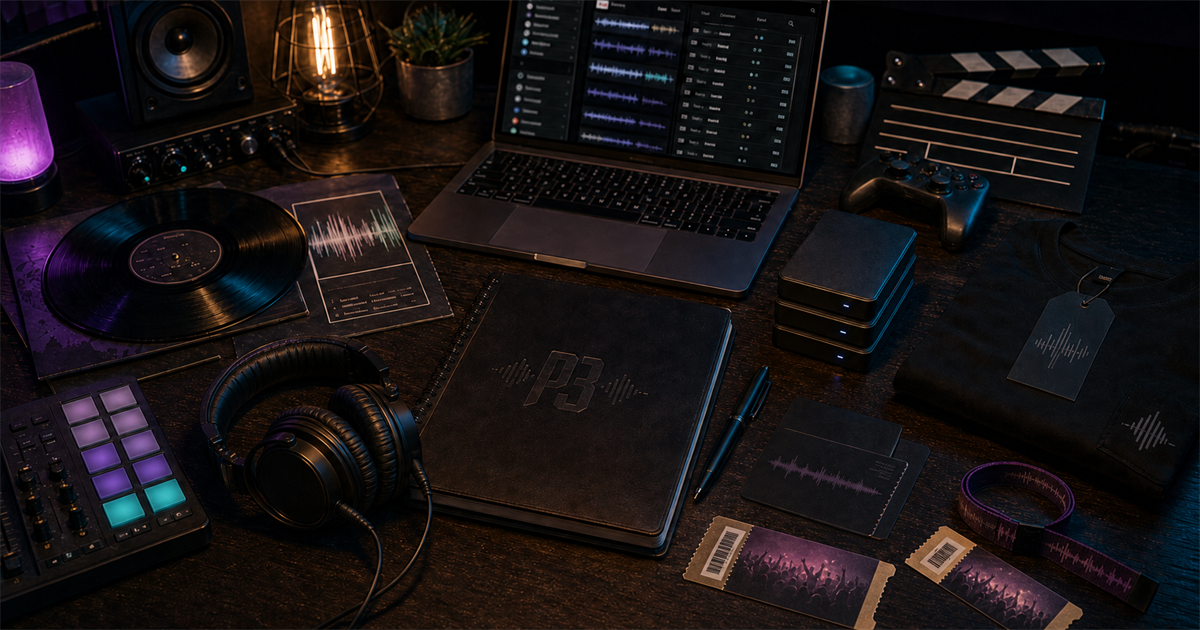
Your logo doesn't need to be elaborate. A clean wordmark in your chosen typography, applied consistently, outperforms a complex symbol that renders as a blurry thumbnail on mobile. Simplicity scales. At Plutony Beats, the visual consistency across releases — from beat thumbnails to social content — creates a recognizable aesthetic that helps listeners identify a track before they've heard a note. That recognition builds over time into trust, and trust turns casual listeners into loyal ones.
Social Media Strategy: Consistency Over Virality
The most common mistake independent artists make on social media isn't posting the wrong content — it's chasing virality instead of building a presence. A viral moment is borrowed attention. Consistent presence builds owned attention, and owned attention compounds.
Pick two platforms and commit to them. Not because the others don't matter, but because spreading yourself thin across five platforms without establishing depth anywhere is the fastest route to exhausting yourself while building nothing. For most independent artists in 2026, that looks like TikTok and Instagram for short-form video discovery, or YouTube and Instagram for a longer-form content and community mix. Your genre and audience demographics should determine which combination makes sense for you.
Consistency doesn't mean daily posting. It means predictable cadence. One high-quality video published on the same day each week, with consistent visual framing, will outperform seven rushed posts scattered across a month. The content can vary, but the timing and aesthetic should feel like a reliable appointment. Artists who commit to a single visual framework — one color scheme, one framing style, one recurring format — report being treated more seriously by industry contacts within months, even before their numbers change dramatically.
There's also a trap that established artists can afford that independent artists cannot: mystique. Being "too cool to post" only works after you have an audience that is already curious about you. Before that point, absence reads as irrelevance.
Creating a Content Ecosystem
A useful way to think about your content output is through a 70/20/10 framework. Seventy percent of what you post should be value and personality — behind-the-scenes footage, creative breakdowns, process videos, vlogs that let people into your world as an artist. Twenty percent should be community content: engaging with fans, responding to comments, amplifying collaborators, sharing things that aren't centered on you. The remaining ten percent is direct promotion — new releases, links to your beat store, explicit calls to action.
Most artists invert this ratio. They post ten percent personality and ninety percent promotion, and then can't understand why engagement is flat. Audiences follow people, not catalogs. The more of yourself you show — your process, your influences, your opinions, your creative failures — the more reason people have to keep coming back between releases. Listeners who feel like they know you behave very differently from those who only encounter you when you're selling something.
A Brand Bible is worth building even if nobody else ever reads it. Write down your one-sentence "Why" — the core reason your music exists and who it's for. Describe your target listener in specific terms, not "music lovers" but an actual person: their age range, what they're going through, what else they listen to. Document your visual rules, your tone of voice, and the content formats that consistently perform. Tools like Notion, which has a generous free tier, make this easy to maintain and revisit when creative decisions start feeling difficult. Having written principles cuts decision fatigue considerably — when you're staring at a template wondering whether a post fits your brand, the Brand Bible makes the answer faster.
Collaborations and Networking
The networking principle that consistently appears among artists who have built real communities is some version of "give four times before you ask once." Before approaching another artist for a collaboration or feature, find four genuine ways to add value to them first — share their music with a specific comment about what you liked, engage meaningfully with their releases, introduce them to someone useful, or show up in their comment section in a way that demonstrates you actually listened. Relationships built on real contribution produce real outcomes. Transactional networking produces hollow exchanges that neither party remembers six months later.
Collaborations work best when both audiences overlap without being identical. A trap producer collaborating with an R&B vocalist reaches both audiences in a way that feels organic rather than forced. An independent hip-hop artist featured on a podcast reaches listeners who weren't actively searching for new music but might convert into genuine fans. The question to ask before any collaboration is straightforward: does my audience genuinely benefit from this, and does theirs?
One thing worth examining honestly is whether your brand reflects who you actually are, or who you think you should be to be taken seriously. Artists who lean into their genuine personality — however niche it might seem — consistently outperform those trying to replicate what's already working for someone else. For example, an artist who spends years trying to fit a harder aesthetic may find more traction after leaning into the personality they were hiding — anime references, awkward humor, producer-nerd details, whatever is actually true. Authenticity isn't a marketing strategy. It's the only durable foundation a brand can be built on.
Building a brand as an independent artist is a long-term project, not a campaign. It requires the same consistency and honest iteration you'd apply to improving your music — repeating what works, cutting what doesn't, staying clear about what makes you different from the flood of artists uploading today. Start with the pieces you can control this week: the colors, the story, the posting rhythm, and the sound. If you need instrumentals that support that identity instead of fighting it, browse the Plutony Beats catalog by mood and genre, then build the visuals and release plan around a sound that actually feels like you. The artists who figure that out early don't just make better music. They build the kind of careers where the music can actually find the people it was made for.
Found your sound?
Browse premium beats crafted for artists like you.
Tags
Related Posts
Making Money From Music in 2026: Revenue Streams for Independent Artists
Streaming alone rarely pays the bills. Here's how independent artists build real income in 2026 across beats, sync, live shows, fan funding, and catalog strategy.
Copyright and Sampling: What Every Artist Needs to Know
Sampling without permission is a legal risk, even for a few seconds. Learn how copyright works, how sample clearance happens, and how to protect your own.

How to Price Your Music: Beats, Features, and Services
Learn how to price beats, features, and music services with real market data, pricing psychology tips, and strategies that grow with your career.